

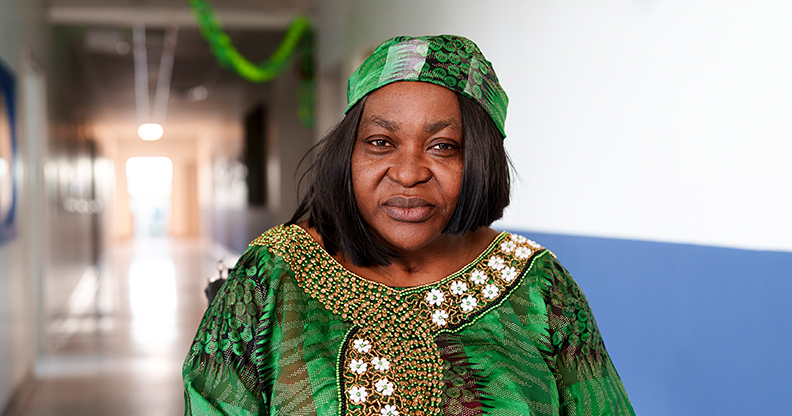
When Éveline Claire came to Quebec in 2012, she had big dreams. A medical microbiologist by trade, she immigrated here as a skilled worker with her six children.
Two years later, everything changed. She became quadriplegic. “I couldn’t move anything below my neck,” she said. Diagnosed with neuromyelitis optica, she now lives with significant physical and sensory disabilities. A prisoner of not only her body but also a semi-basement apartment ill suited to her needs, she found herself facing a brutal reality that filled her head with existential questions: Why me? Is life worth living?
One in five people in Quebec lives with a disability
In 2022, more than one in five people aged 15 and older in Quebec—approximately 1.4 million people—lived with at least one disability. Of these, about half a million lived with a severe or very severe disability.¹
In a society still very far from being universally accessible, Éveline must constantly adapt to what is “normal” for everyone else. In 2015, an instructor of people with disabilities invited her to the Centre communautaire Radisson. She passed through its doors with a set of assumptions—but came away with some amazing discoveries.
Smiles. Energy. A contagious love for life. “Wow!” she remembered thinking. When she got back home, Éveline thought long and hard about her situation. If other people could keep going with a full life despite their challenges, then she could too. After this realization, giving up was no longer an option.
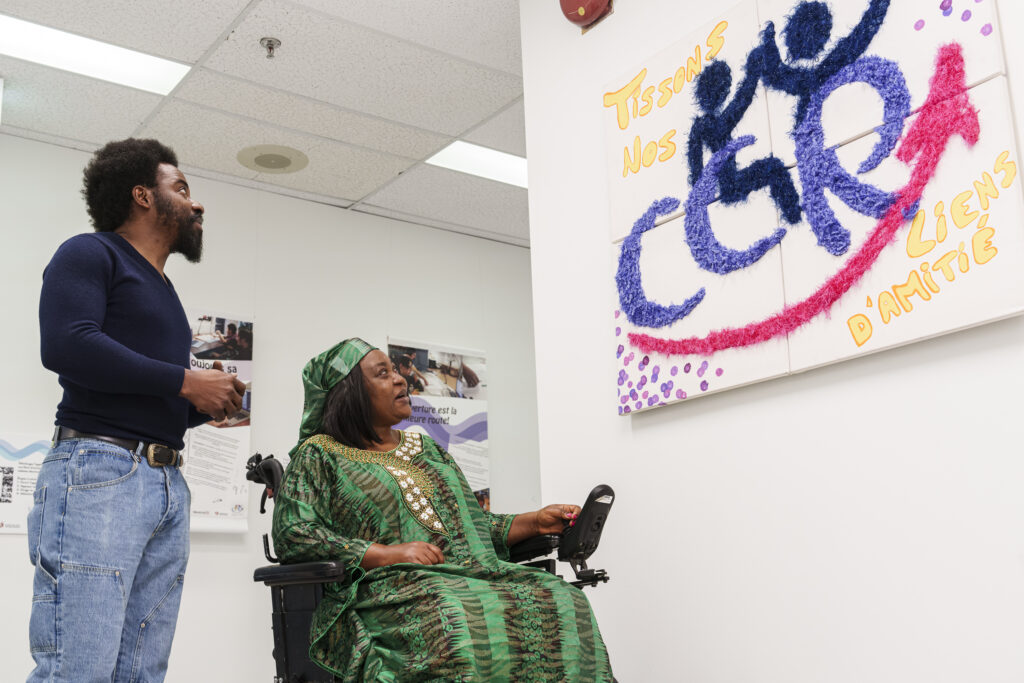
The Centre communautaire Radisson is now her second home and a place that lets her get out of the house, explore, and enjoy the outdoors on trips to Camp Papillon and Oka Beach. She even went on a helicopter ride over Montreal. These experiences have transformed her relationship with the world—and with herself.
“I want people to no longer see my disability, skin colour, age, or gender, and instead see the human being named Éveline Claire.”
Slowly but surely, Éveline is regaining her independence and the confidence she thought she had lost. “I’m a mother, grandmother, employee, friend, and sister. I want to be someone who contributes to society.” She says that she feels like she can change things. She has a clear goal: “I want people to no longer see my disability, skin colour, age, or gender, and instead see the human being named Éveline Claire.”
Éveline knows this will be a long road, but she believes deeply and fervently in the path she is on.

Watch the video
Source:
1. Statistics Canada, Canadian Disability Survey (CDS), 2022.
1 out of 5 people receives our help.
5 out of 5 people benefit from it.
Let’s all lend a hand
Supporting a network of over 375 community agencies also means promoting an inclusive, poverty-free society.