


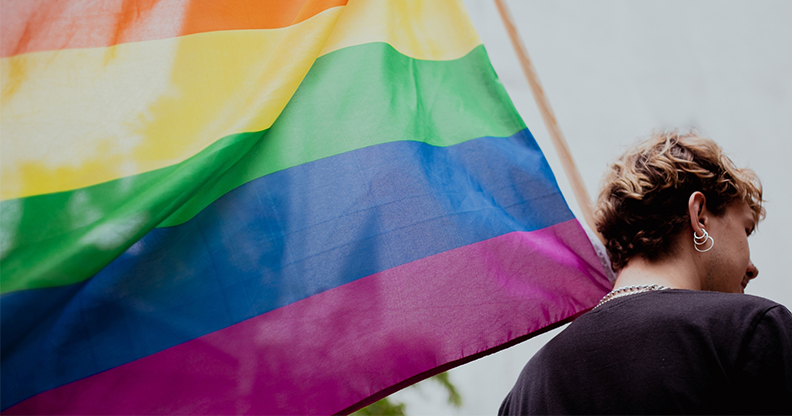
Despite progress, challenges still exist
Greater Montreal is a place of diverse identities, realities and life experiences. But despite decades of progress on rights, many 2SLGBTQIA+ people still face discrimination, isolation or difficulty accessing housing and services. Even today, these factors take a toll on many people’s mental health, safety and sense of belonging.
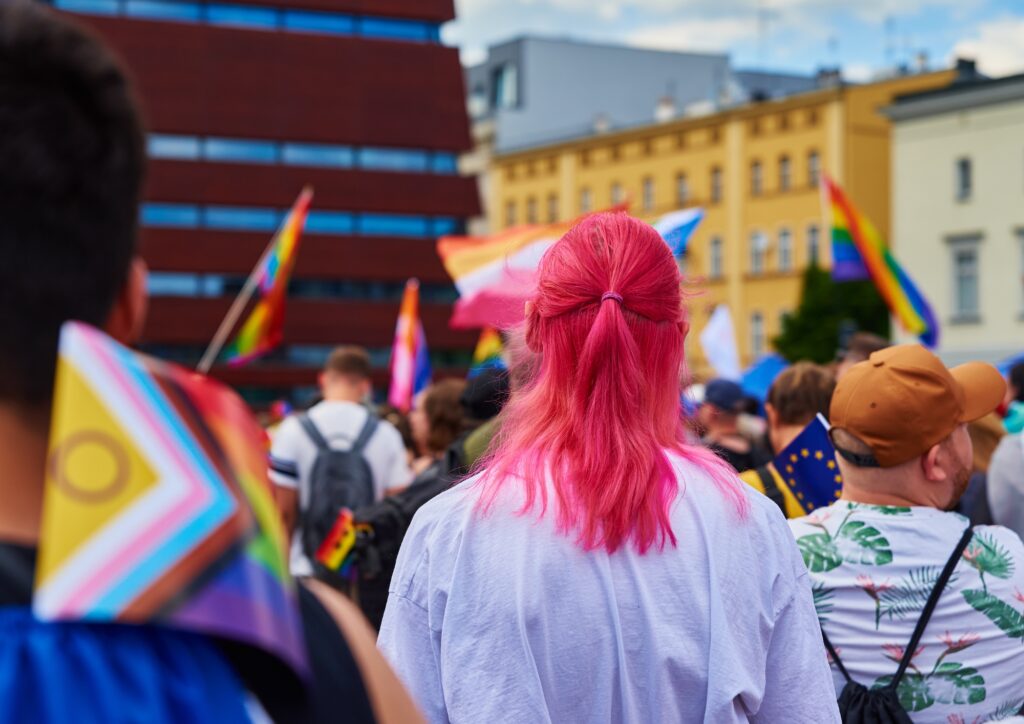
Multiple identities
The acronym 2SLGBTQIA+ covers a wide range of identities and experiences, including two-spirit, lesbian, gay, bisexual, trans, queer, intersex and asexual people, as well as other forms of sexual and gender diversity.
The lived experiences of members of these communities are far from uniform: a young trans person, a gay senior, a queer migrant and an Indigenous two-spirit person face different challenges.
Discrimination based on gender or sexual orientation can also intersect with other forms of exclusion, based on factors such as ethnic origin, immigration status, financial situation or disability. This underscores the need for an intersectional approach in order to understand people’s circumstances and needs.
Real progress—but the legacy lingers
In Canada, 2SLGBTQIA+ people were long criminalized, pathologized and marginalized. Same-sex relations weren’t decriminalized until 1969, and legal protections explicitly covering trans people weren’t introduced until 2017.
While the law has evolved, this history still reverberates today, fuelling discrimination, stigmatization and exclusion, with real repercussions for access to employment, housing, health care and the sense of belonging to their community.
⚖️🏳️🌈 Rights can never be taken for granted
After decades of significant progress, 2SLGBTQIA+ communities are now facing a resurgence of hate speech and challenges to their rights in many countries. Quebec is not immune to this trend. A 2025 study by GRIS-Montréal points to worrying signs that acceptance of sexual diversity is declining among high school students.1
Mental health issues
Sexually and gender diverse people are more vulnerable to psychological distress than the population as a whole. In Canada, they’re more likely than heterosexual and cisgender people to report poor mental health, with higher rates of anxiety, depression and suicidal ideation.2 These disparities do not stem from sexual orientation or gender identity themselves, but from the discrimination, prejudice, rejection and violence people face.
Increased risk of homelessness and social exclusion
Homelessness disproportionately affects members of 2SLGBTQIA+ communities. In Quebec, 16% of people experiencing homelessness identify as LGBTQ+.3 Among young people, the proportion is even higher, ranging from 20% to 40% in surveys. Family rejection is one of the main causes of this increased vulnerability.4
For many trans or non-binary people, these challenges can extend to housing resources when facilities are not adapted to their needs. Access to safe housing and inclusive services is essential for preventing social exclusion.
These issues take on a very concrete form in the story told in the following article:
Essential resources for 2SLGBTQIA+ communities
Community agencies are often one of the first places 2SLGBTQIA+ people turn for help, guidance or simply a space to be themselves. They offer a range of services, from psychosocial support to housing assistance, peer support and awareness-raising.
But inclusion isn’t important only at specialized agencies. 2SLGBTQIA+ people use local services, take part in community life and draw on a wide range of resources throughout their lives. That’s why welcoming practices adapted to the diversity of lived experiences and identities must be developed. Centraide of Greater Montreal supports agencies that help make these spaces more inclusive and accessible for all.
📌 Key takeaways
- At least 1.3 million people—4.4% of Canada’s population aged 15 and older—identify as part of 2SLGBTQIA+ communities.3
- Young people aged 15 to 24 are more likely to identify as LGBTQ2+.3
- An estimated 10% of older adults identify with 2SLGBTQIA+ communities, though their experiences often remain largely invisible.5
- In Quebec, 16% of people experiencing homelessness identify as LGBTQ+.2 Among young people experiencing homelessness, the proportion is 20% to 40%.3
Agencies making a difference
Some of the Centraide-supported agencies that contribute to inclusion for 2SLGBTQIA+ communities:
Sources :
- GRIS-Montréal (2025). Augmentation des niveaux de malaise. Ce que les élèves du secondaire pensent de la diversité sexuelle, 2017-2024. [report].
- Statistics Canada (2024). Socioeconomic profile of the 2SLGBTQ+ population aged 15 years and older, 2019 to 2021 [online].
- Ministère de la Santé et des Services sociaux du Québec (2023). Dénombrement des personnes en situation d’itinérance visible au Québec 2022 – Rapport de l’exercice « Tout le monde compte ». [report].
- Côté, Philippe-Benoît et Blais, Martin (2019). Le passage à l’itinérance chez les jeunes LGBTQ+ : une analyse qualitative des points de bascule. [scholarly article].
- Fondation Émergence (n. d.). Sensibiliser et outiller pour des milieux aînés plus inclusifs. [online].
1 out of 5 people receives our help.
5 out of 5 people benefit from it.
Let’s all lend a hand
Supporting a network of over 375 community agencies also means promoting an inclusive, poverty-free society.