


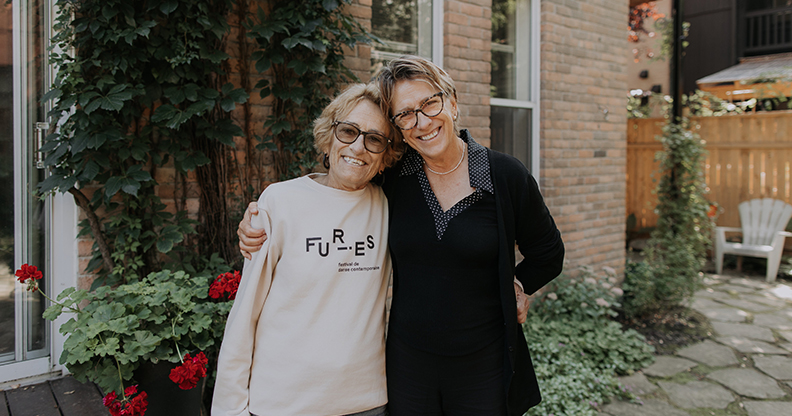
A new assignment landed on my desk at the end of the summer: an interview with two sisters who had just set up an endowment fund. “A what?” I asked. Centraide of Greater Montreal offers many ways to give, but I hadn’t heard of this one before. A bit of research clarified the basics: the purpose of an endowment fund is essentially to provide an organization with stable, long-term financial support by generating income on invested capital. Now I was ready to meet the Séguin sisters.
Par Marie-Christine Beaudry
Research and Content Advisor, Centraide of Greater Montreal
I visited them on a beautiful day in mid-September. The air was crisp, the sun filtered gently through the leaves. I was happy to get out my fall clothes.
I made my way to a small garden on the Plateau Mont-Royal, where Colette Séguin lives. Her sister France was already there, waiting for my colleague from the Planned giving department and me. We settled in while Colette shuttled between kitchen and patio, serving black coffee from an Italian coffee maker. She dropped a little sugar into her sister’s cup, knowing her tastes.
A reflection shaped over time
France opened the conversation with stories of her travels. She had spent her career abroad, working for multinational corporations. Her role was to study the social impacts of mining and oil projects on local communities. It was a job that demanded empathy.
The same empathy drew her to volunteer with various agencies after she returned to Montreal. “I had just retired,” she recalled. “I still had boundless energy and wanted to keep working.” Then, in 2016, a Centraide employee told her about bequests, and the seed was planted.
Never having had children, and fortunate in life, as she often says, France found the idea of a legacy gift appealing. Over the following years, she visited community agencies supported by Centraide and attended a webinar on the subject. She learned more about Centraide’s work and did some thinking. “I had to give the seed time to grow in my mind,” she explained. “At 60, I felt I still had plenty of time ahead of me.”
Colette returned with the coffee pot and joined the conversation.
“France was always very involved,” she said. “She always talked about her projects, her volunteer work and the causes close to her heart. I wasn’t directly involved but I heard all about it.”
Then, in May 2026, shortly after Colette was diagnosed with a serious illness, France attended a Centraide coffee meet-up on endowment funds, and something clicked.
“I immediately wanted to do this with Colette,” she recalled. “All our lives, we’ve always been very close. She went to join me in Africa and spent months there with me. We bought a building together when we were young. I often say we’re twins—with a two-year difference!” They exchanged a glance and laughed.
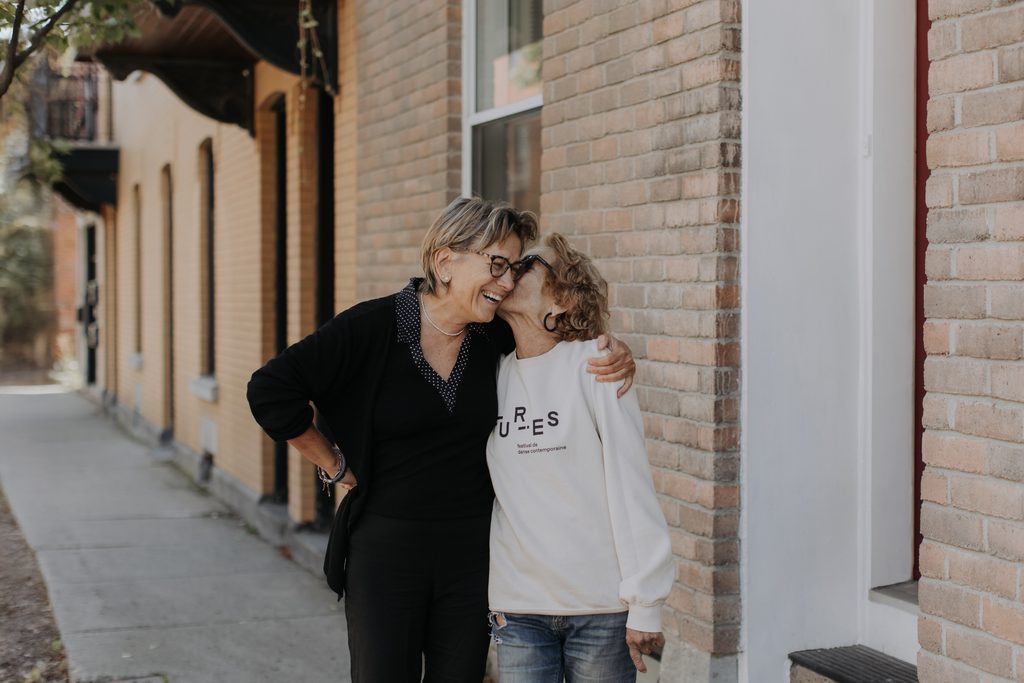
Colette picked up the story: “For us, this endowment fund is a symbol of continuity. When you realize the end is near, you have to do something. We’re making this gift to Centraide of Greater Montreal out of empathy, in the spirit of giving back.”
The difference between a bequest and an endowment fund is that a bequest is a gift made after the donor’s passing while an endowment fund is established during the donor’s lifetime. Every year, a portion of the interest generated by the fund is paid out to the beneficiary organization to support its work. As the Séguin sisters put it, “We can see the impact while we’re still here.”
A brighter future
Asked what impact they hope their gift will have, the Séguin sisters have a long list at the ready: “More social solidarity, more housing, more help for women who are victims of domestic violence, for Indigenous people, for low-income families. By giving to Centraide, we are confident that the money will go to the right places, to support many causes that are close to our hearts. It’s reassuring.”
“Centraide is a cornerstone organization that supports all the others.”

A year ago, neither Colette nor France knew what an endowment fund was. One meeting on the subject and some conversations with Centraide advisors later, they had found the philanthropic vehicle best suited to leaving a meaningful legacy for the community. “It was all very simple and natural,” said France. “I felt welcomed, respected and guided.”
Now that their legacy is secured, the Séguin sisters can savour every moment together, knowing their impact will endure long into the future.
1 out of 5 people receives our help.
5 out of 5 people benefit from it.
Let’s all lend a hand
Supporting a network of over 375 community agencies also means promoting an inclusive, poverty-free society.