Greater Montreal is grappling with a severe housing crisis.
Zoom in on the situation
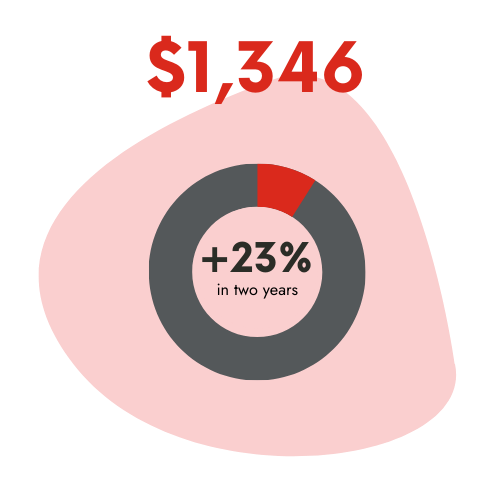
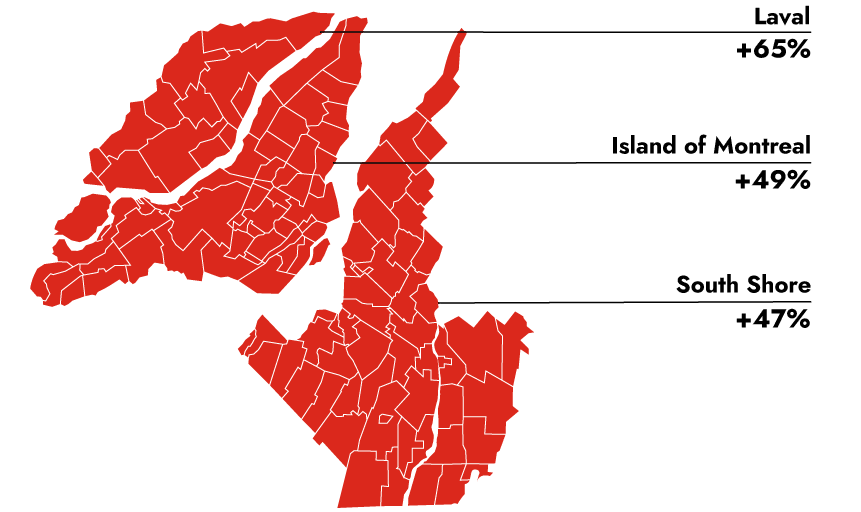
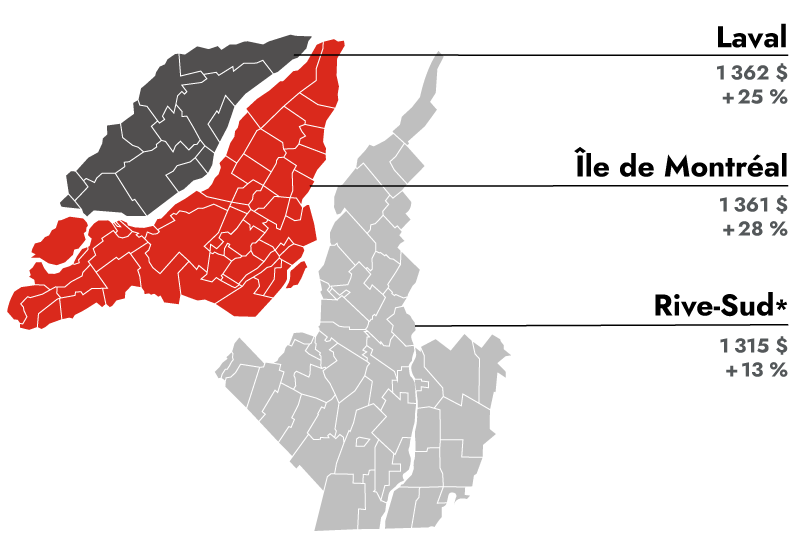
How much does it cost to rent a two-bedroom apartment in Greater Montreal?
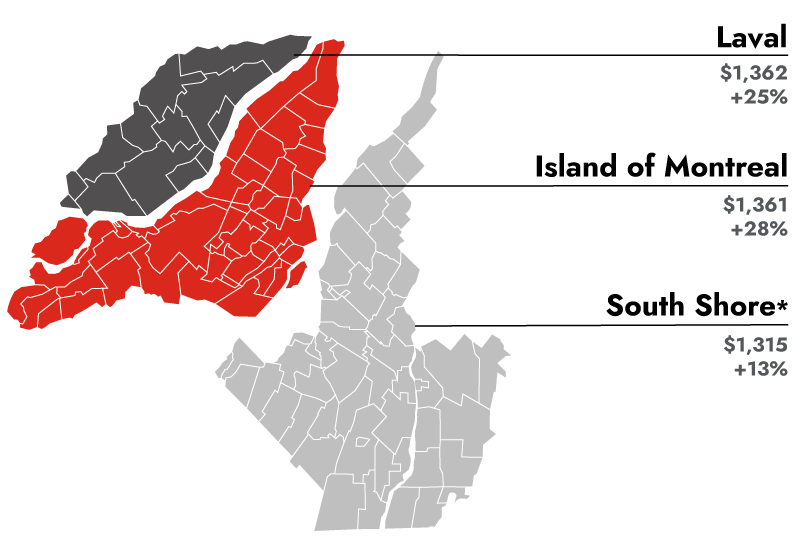
Rental costs have increased everywhere, so there is very little difference between Montreal, Laval, and the South Shore.
Two-bedroom apartment. Variance over two years (2023-2025).
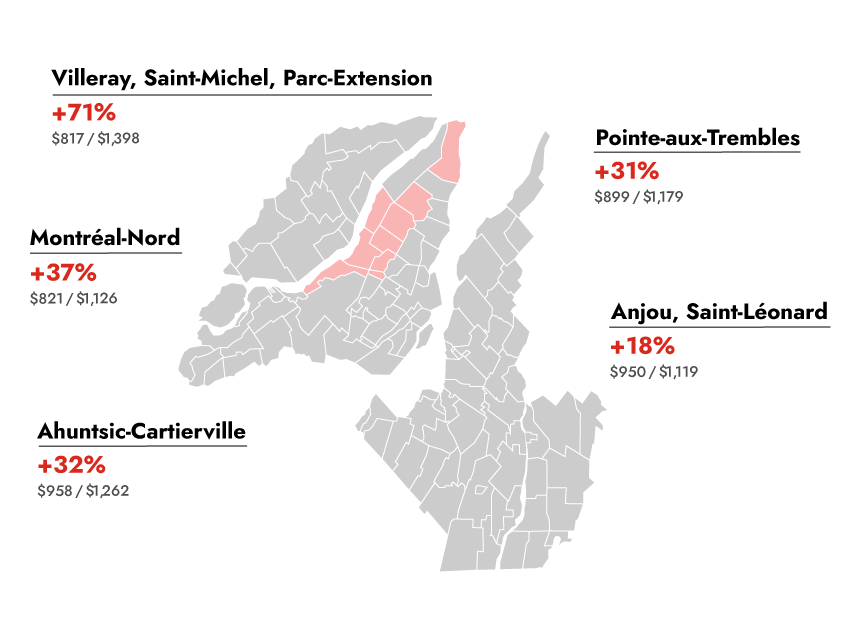
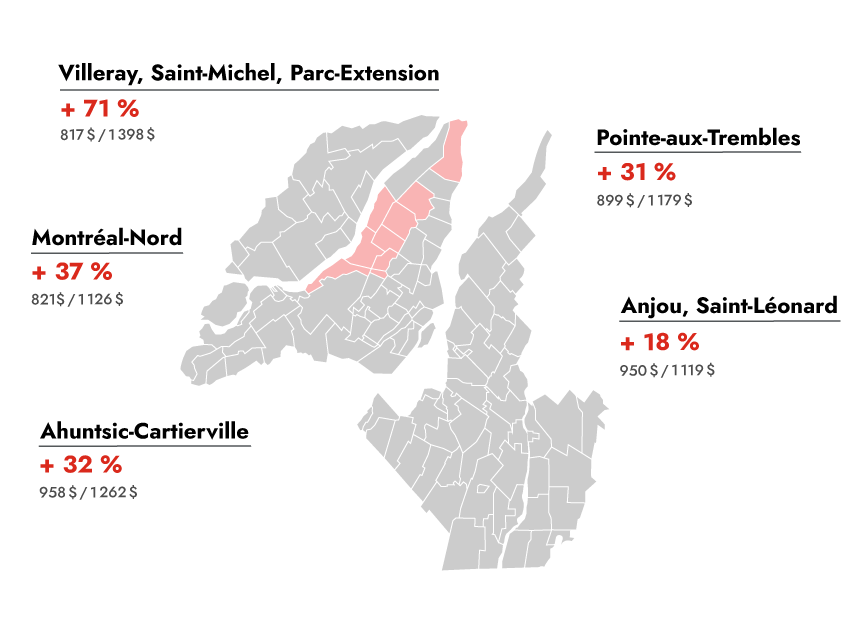
Several neighborhoods that still offered affordable rents saw their prices increase sharply.
In 2023, five neighborhoods had average rents below $1,000; in 2025, none remained.
Two-year change in neighborhoods where the average rent for two-bedroom apartments exceeded $1,000 per month.
Cause for worry
Newly available rental units cost a lot more than units already occupied.
Two-bedroom apartments.
This trend is forcing many households to stay in inadequate housing.
More than one third of renter households in Greater Montreal (230,000) already spend too much of their income (over 30%) on housing, which compromises their ability to meet other basic needs. Along with significant rent increases comes the fear that many more people will fall into this situation.
Cooperative, non-profit and low-income housing complexes represent less than 5% of Greater Montreal’s available rental units, or 32,451 housing units. Currently, more than 14,000 eligible households on the Island of Montreal are on the waiting list for social housing.
Did you know?
Created in 1959, Les Habitations Jeanne-Mance was the first social housing complex in Quebec, and it now has nearly 800 units for seniors and low-income families. Action Centre-Ville, an agency supported by Centraide for 35 years, offers many services and activities at this facility.
According to the Regroupement des comités logement et associations de locataires du Québec (RCLALQ), tenant evictions and “renovictions” reportedly increased by nearly 132% between 2022 and 2023.
Thousands of people currently experiencing extreme vulnerability
Many are forced to live in inadequate housing, i.e., units that are too expensive, too small, or substandard.
Some people have to stay with family or live with many other people under the same roof.
Others are on the street.
Something can be done
For people in a situation of poverty, solutions to these issues include developing social housing and implementing crisis measures to support people who are homeless or who are facing a housing issue. Community agencies supported by Centraide help implement these solutions.
Every year, the housing agencies supported by Centraide help 50,000 tenants with housing issues (unjustified rent increases, evictions, unhealthy conditions) to defend their rights.
In many neighbourhoods with major housing problems, agencies have taken proactive measures so that residents can enjoy safe and decent housing.
All housing agencies support citizen actions to improve access to enough affordable, decent housing.
To provide a good quality of life and living conditions, a neighbourhood needs adequate housing along with accessible collective facilities and infrastructure (parks, schools, recreation centres). The 40 neighbourhood roundtables supported by Centraide carry out initiatives in this area.
Le Grand Montréal se débat dans une profonde crise du logement
Zoom sur la situation
Homelessness agencies provide alternatives, services and activities for people experiencing residential instability and homelessness (housing, day and evening centres, supportive housing, street outreach and community work).
Le coût des loyers a augmenté partout, si bien que l’on observe très peu de différence entre Montréal, Laval et la Rive-Sud.
Plusieurs quartiers qui offraient encore des loyers abordables ont vu leurs prix s’envoler.
En 2024, cinq quartiers affichaient des loyers moyens sous les 1 000 $; en 2025, il n’en reste aucun.
Quartiers et municipalités présentant une variation de 25 % ou plus sur deux ans (2023 à 2025) sur les logements de deux chambres.
An ongoing commitment to housing
Centraide-supported agencies are central to addressing the housing challenges we are facing. Centraide complements these efforts through a variety of channels—taking direct action, building knowledge, supporting transformative initiatives and contributing to public policy—all with the goal of bringing sustainable solutions to the fore.