


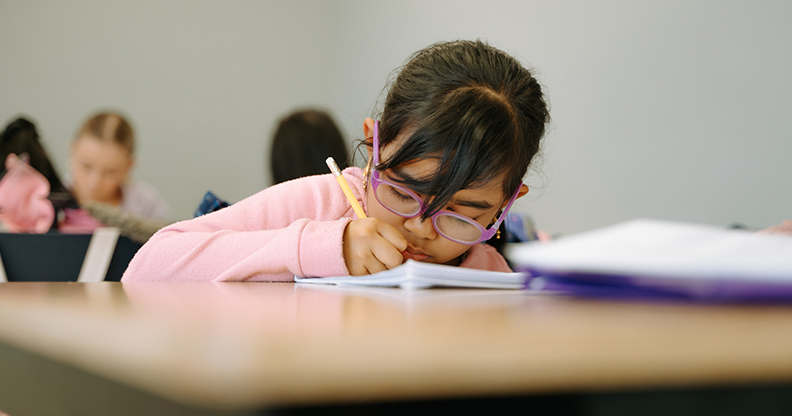
Before they start learning to read and write, nearly one in three children in Quebec enters kindergarten with vulnerabilities that could make the road ahead steeper. It can be their language skills, social skills, emotional development or other skills. This is why early intervention is critically important, and why many agencies supported by Centraide work with children, their families and their communities at the point where it can make such a big difference.
When we talk about academic success, we generally think of students in a classroom, but its roots reach further back—to long before the first school bell rings.
Learning to wait your turn, ask for help, tell a story, navigate a game with other kids and express your feelings are early childhood experiences that lay essential groundwork for the first day of school.
But the latest numbers from the Québec Survey of Child Development in Kindergarten (QSCDK) tell a sobering story. In 2022, 28.7% of Quebec children entered school with vulnerabilities in at least one area of development. In Greater Montreal, the figures break down to 28.1% in Montreal, 33.9% in Laval and 29.1% in Montérégie.
Wide-ranging vulnerabilities
These vulnerabilities span physical health and well-being, social skills, emotional maturity, cognitive and language development and communication skills. None of this seals a child’s fate, but it can make learning harder and demand extra support from the first school years. Over time, it can affect a child’s ability to adapt and progress in school.
Poverty, living conditions and child development
A child’s environment shapes their developmental opportunities. Poverty and financial insecurity are important factors. When a family is stretched thin by low income, overcrowded housing and limited access to resources and services, a child has fewer chances to learn, play and thrive.
The disparities across Greater Montreal bear this out. In Montreal, the proportion of vulnerable children ranges from a low of 17.3% to a high of 36.9%, depending on the neighbourhood. Areas such as Montréal-Nord, Saint-Michel and Parc-Extension have higher rates, while Saint-Laurent, Côte-Saint-Luc, Notre-Dame-de-Grâce and the West Island have much lower rates. These gaps largely mirror neighbourhood differences in income, housing and access to local resources.
These findings confirm what Centraide and the agencies it supports see every day: social and economic inequalities shape children’s development from the earliest years.

“Growing up in poverty often means more obstacles from day one. But giving families the right support creates conditions where children can thrive, learn and gain confidence in their abilities.”
— Tasha Lackman
President and CEO of Centraide of Greater Montreal
Social supports for healthy development
The early years also present the best chance to make a lasting difference. When families get timely help, the benefits extend far beyond toddlerhood. Parents who feel supported are often better equipped to nurture their child’s development, foster their language skills, meet their needs and help them build self-confidence.
Across Greater Montreal, agencies supported by Centraide help families on many fronts. Some run reading and play activities for children; others offer workshops to boost motor, social or language skills. Still others create spaces where parents can connect, escape isolation and find support during tough times.
Through these agencies, Centraide helps to create favourable conditions for children’s development and reduce the inequalities that can block educational success.
And the support doesn’t stop when the child starts school. Homework help, mentoring, after-school programs, youth centres, counselling and educational camps all help children and teens keep growing, build confidence and tackle the challenges ahead.
Academic success develops over time. It starts from the building blocks of early childhood and grows through the resources, relationships and learning opportunities that surround young people as they move forward.
📌 Key takeaways
- Nearly 3 in 10 children start kindergarten with vulnerabilities in at least one area of development.
- These vulnerabilities affect physical health and well-being, social skills, emotional maturity, cognitive and language development, and communication skills.
- Poverty and living conditions influence children’s developmental opportunities.
- Early intervention with young children and their families promotes educational success.
Source: Institut de la statistique du Québec (2024). Québec Survey of Child Development in Kindergarten (QSCDK) 2022.
1 out of 5 people receives our help.
5 out of 5 people benefit from it.
Let’s all lend a hand
Supporting a network of over 375 community agencies also means promoting an inclusive, poverty-free society.