



Given the scale and complexity of the challenges our world is facing, we need to radically rethink how we support social transformation. The solution is catalytic philanthropy.
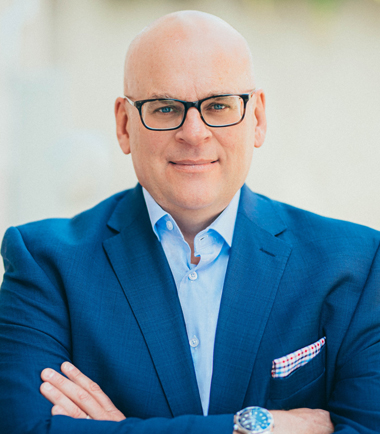
Claude Pinard
President and Executive Director of Centraide of Greater Montreal
For decades, philanthropy has been a beacon for those in need and for the people working to help them. It offers a precious ray of hope, provides a bulwark against injustices, and acts as a catalyst for social change.
Yet today, one fundamental question looms: are our philanthropic methods compatible with the scale and complexity of the challenges we face?
I am concerned they may not be enough to sustain the socio-ecological transition, for one thing. Despite our many efforts, we sometimes see such meagre returns. Knowing that the ones who will suffer most from climate change are our most vulnerable populations, I wonder, when we can’t even seem to take care of our fellow human beings, how we will ever take care of our planet?
We have innovated, that much is true, and we continue to do so. But impact philanthropy, new financial tools and other novel ideas, though crucial, don’t go far enough.
The world is changing at an unprecedented pace. The philanthropic sector must not only evolve and adapt, it must reinvent itself altogether.
“Nothing is more powerful than an idea whose time has come.”
– Victor Hugo.

The air is heavy with the sense of collective responsibility, but also hope and anticipation. We are the guardians of social transformation; I believe now is the time to radically rethink philanthropy.

Philanthropy has worn many hats, evolving over the years along with society. Initially, philanthropy amounted to simple charitable actions: the giving of time, resources, or expertise to those who needed it. Eventually, it became more structured. Foundations, organizations and programs were established to funnel efforts, maximize the impact and invest more strategically.
In recent years, we’ve found inspiration in a number of promising movements. Trust-based philanthropy, for example, upturned the traditional donor-recipient relationship and the inevitable power imbalance this created.
Collaborative philanthropy based its approach on data and results. It marked an important—and admirable—shift toward using tools that allowed us to more effectively measure and optimize our impact. It also brought home the incredible expertise we’ve accumulated in the field, as well as the importance of diversifying our data collection to avoid blind spots caused by our biases.
We can be proud of the headway we’ve made in finding ways to collaborate. Even so, we need to recognize that these types of philanthropy have limits. The challenges we now face are as complex as they are systemic. Fighting poverty and social exclusion—the very mission of Centraide of Greater Montreal, which I head—is a formidable challenge, and the underlying issues are numerous, interconnected and deeply rooted in our societal structures. Take poverty. Poverty isn’t merely a matter of not having enough money, it’s linked to a plethora of factors such as health, education, discrimination and access to opportunities.
Sometimes we lose sight of what’s important in our search for a quick fix. We like to see change. We need our impact to be instantaneous. We want our donations to carry weight, to “pay off.” In philanthropy, concrete actions seem like a magic bullet. It’s easier, more tangible, to dish out 5,000 meals than oversee comprehensive, long-term social transformations that may only bring results after a seemingly endless series of trials and errors. The drawback in this case is that we tend to focus on the consequences of poverty and social exclusion without looking to address the causes. Clearly, it is still important to address essential needs and take concrete action; in fact, it’s one of Centraide’s areas of action. But it’s equally important to bring about long-term change and to pursue a far-reaching vision.

In our quest for a better world, we always circle back to this one question: “Are we truly making a difference?” Our efforts are certainly praiseworthy, but do they really measure up? There’s no straightforward answer. If we want to turn that answer into an unequivocal “yes,” we need to move beyond traditional approaches and transform the way we do things.
This is paramount. I, for one, believe our current brand of collaboration is no longer enough. We need radical collaboration, a model that has given rise to great projects that continue to bear fruit. One of them is the Initiative montréalaise de soutien au développement local and its neighbourhood roundtables. The Collective Impact Project is another that brings together philanthropic, institutional and community partners from different backgrounds under unified governance.
Still, I think that before we seek out collaborations or solutions to issues, we must first focus on developing a common vision of the issues themselves. For us to succeed in this, now more than ever, stakeholders need to increase their engagement. This is a role that philanthropy as a whole must both understand and embrace if we are to bring about a measurable, systems-wide impact.
We need to reassess our collaborative model and take it much, much further. It will likely be a bumpy ride, but we must muster the courage to take this rocky road.
We need to consider a new, more community-based, approach to philanthropy, one that supports action by, for and with vulnerable groups. This means fostering a spirit of community where everyone has a voice and, above all, the means to realize their full potential. This movement has been growing since the pandemic, which seems to have awakened our sense of community and geared us to really work together.
We need a collective approach that spans traditional boundaries of geography and areas of action, one that embraces a broader concept of community in which shared aspirations are the starting point for important conversations that yield common goals, the achievement of which we will assess together. In these frank but sometimes discordant conversations, power dynamics are tempered by the pooling of experiences. Everyone works for the common good.
The needs and challenges we face are particularly complex, and no foundation, individual or agency holds the golden ticket to a solution. That’s precisely why we must set common goals. It doesn’t mean we have to check our egos or our allegiances at the door. We just have to realize that those common goals take precedence.
Similarly, it may seem complicated to bring together people from diverse bodies with equally diverse ambitions, but it helps build a healthier social contract. Take away that social contract, feelings of exclusion intensify and the sense of community withers. So common goals must prevail over individual or corporate interests in order to focus on the essential: achieving our targets. And, to be motivational, those targets must be measurable. It’s also essential that we establish evaluation and accountability processes that everyone can agree on.
We should never balk at having conversations with people outside our usual circle of stakeholders. Doing so forces us to confront how we do things and ask the questions that need asking. And maybe along the way, we find new methods for gauging our impact. Having tough conversations pushes us to stretch, change and embrace different viewpoints, even if they are diametrically opposed to our own. We must agree to discuss social inequalities through the lens of social justice. Only true solidarity leads to real change. These discussions can be uncomfortable but they are overdue.
I believe our cause would benefit from a shift toward catalytic philanthropy. This new approach has roots in both community philanthropy and radical collaboration. Catalytic philanthropy isn’t about Band-Aid solutions. It’s about digging deeper and making fundamental changes in the way systems work. Catalytic philanthropy champions cross-sectoral, cross-disciplinary, cross-generational and cross-cultural collaboration. It’s about taking calculated risks and taking the long view.

Imagine a forest. If one tree gets sick, we can treat it individually. But if we discover that the disease is due to contaminated water, and that the water runs through the entire forest, treating a single tree won’t be enough. Catalytic philanthropy pushes us to look for the source of the contamination, understand the entire ecosystem and target our actions accordingly.
It encourages us to take a holistic view, collaborate with partners from different sectors and take risks. Yes, risks. Because change—profound, lasting change—often requires stepping out of our comfort zone, experimenting with new approaches and even risking failure to find the path to success. We need to see the people we are trying to help as part of our team. We must incorporate their ideas and experiences.
The beauty of catalytic philanthropy lies in its ability to create an impact that resonates across generations. It doesn’t stop at giving people fish or teaching them how to fish. It seeks to understand why there are so few fish today and how we ensure that tomorrow, everyone can benefit from an ocean brimming with fish.
Truly supporting the development of catalytic philanthropy requires a profound realignment of our mindset, strategies, operations and posture. Catalytic philanthropy rests on fundamental pillars including five skills and five pathways that I consider essential [see belows].
This level of collaboration, which focuses on transforming our systems, will force all of us to rethink the way we work and adopt a mediatory posture across the board. This, in turn, will spark and facilitate dialogue between partners, who will then be able to identify levers for change and mobilize resources strategically to achieve sustainable impact.
That being said, this posture is not limited to resolving occasional conflicts or facilitating dialogue. The aim is to decipher the often cryptic language of systems, identify levers for action and build bridges between stakeholders. While radical collaboration focuses on the big picture, systemic mediation gets into the weeds in order to bridge disagreements, foster dialogue and harmonize positions and perspectives.
Imagine a group of hikers exploring mountainous terrain. They each have their own maps and compasses. They each use their skill sets and experience to choose which path to follow. They may come to a fork in the path and stop, unsure of the direction they should take. Systemic mediation is like having an elevated vantage point—a hill or boulder—that the hikers can climb to gain a better perspective and chart a way forward together. It doesn’t provide clear-cut solutions but it does help to clarify your vision and steer you in the right direction.
In our interconnected world, where social and environmental issues are intertwined, actions in one area can have unintended repercussions in another. Systemic mediation provides tools to help us anticipate any domino effects, understand the underlying interrelationships and act in an informed way.
But it also goes beyond analysis and understanding. It’s also about instilling empathy into everything we do, lending a sympathetic ear, including to marginalized voices (whether within agencies or communities) and ensuring that our every act contributes to the collective good.
Many philanthropic actors already serve as ad hoc systemic mediators in their workplace. What we need now is to formalize and legitimize this role. We need to hone our mediatory skills, define a systemic mediation code of ethics and develop more formal mediation tools to maximize the systemic impact of our initiatives and achieve our objectives.
How can you become a facilitator, a mediator, a catalyst for change? Here are a few ideas that should give you food for thought. Think about how many collaborations you’re currently working on. Have you relinquished some of your power to the people around you? For example, do you involve external groups in your budget decisions?
It’s also important to show a little humility throughout the process because systemic mediation is not a magic bullet. It’s a tool that, when used wisely, can help us navigate a constantly changing world. It reminds us that our role as philanthropists is not to give blindly but to facilitate, connect and, together, create.
To build a better future, we need to join forces, open our hearts and never stop trying to seek common ground.
The most important chapters in history were not the work of isolated individuals but of communities determined to transcend the boundaries that divided them. Collaboration is not a choice, it’s a necessity. It is by working together, sharing resources and embracing diversity that we can truly meet the challenges we face.

I want to live in a society where everyone is included and feels empowered. One without systemic barriers, where the vulnerable members of our society have found catalytic partners among our philanthropic heavy hitters, partners who are committed to creating a more just, equitable and egalitarian society.
We have a responsibility—and an opportunity—to redefine philanthropy, together. This is my call to action. I’ve issued a bold challenge, but it’s also an open invitation to collaborate and innovate. It’s equally a plea to see that the complex social issues we face are bigger than us and our organizations.
Catalytic philanthropy drives positive change in a strategic and transformative way. It’s a glimmer of hope in a world often clouded by adversity. Each·of us has the power to be a catalyst for good, to sow the seeds of progress and inspire others to follow our example.
Collaborating is sometimes—nearly always, I might even say—frustrating! And yet—to come back to the image of our hiking group—when we succeed in rising above our own self-interest and harnessing our talents so a maximum number of people can benefit, not only do we contribute to a better society, but we all emerge stronger and more resilient.
Systemic mediation can therefore be seen as the ties that bind the threads of our social fabric. By building mutual understanding, listening with empathy and seeking inclusive solutions, we can resolve conflicts, heal wounds and build bridges where there was only division. It is a long, hard journey that requires courage, perseverance and unwavering faith in our collective capacity to forge a peaceful, prosperous future.
Let us be the architects of a new era of harmony and collaboration. Let us all be a catalyst for positive change. Let’s commit to being mediators who bridge the differences between us. Together, we can work miracles, overcome obstacles and write a story that will resonate across generations.
The future of philanthropy calls for more complex but also more rewarding roles. I am convinced that we are ready·to meet this challenge.
Five essential skills for catalytic philanthropy
Five pathways to catalytic philanthropy
1 out of 5 people receives our help.
5 out of 5 people benefit from it.
Let’s all lend a hand
Supporting a network of over 375 community agencies also means promoting an inclusive, poverty-free society.